MiyoSmart iQ: What Melbourne Parents Need to Know About the Next Generation of Myopia Control Lenses
In 2020, Eyecare Concepts was one of the first practices in Australia to offer the original MiyoSmart lens, after our team travelled to the early-release launch in Brisbane alongside other leaders in myopia management. Five years on, we are pleased to bring the next chapter of that technology to our patients: MiyoSmart iQ is now available at Eyecare Concepts | Myopia Clinic Melbourne.
This is not a routine product update. MiyoSmart iQ represents the most significant refinement HOYA has made to its Defocus Incorporated Multiple Segments (D.I.M.S.) lens design since it first reached families in 2018. For parents who are new to myopia management, and for the many families we have supported over the past five years, this article explains what has changed, why it matters, and how we are approaching the transition.
Why Myopia Deserves This Level of Attention
Myopia is often described to parents as simply needing a stronger prescription each year. That description undersells what is actually happening inside a child's eye.
Myopia progresses because the eyeball is growing too long, front to back. This axial elongation is the real driver of short-sightedness, and it does not stop mattering once a child can see the board clearly with glasses. A longer eye stretches and thins the retina, which raises the lifetime risk of retinal detachment, myopic macular degeneration, glaucoma and cataract. The risk rises with every additional dioptre, which is why we treat myopia as an eye health condition rather than a vision inconvenience to be corrected and forgotten.
Myopia rates in children have been rising steadily across urbanised populations, including in Australia, for decades. Earlier onset generally means more years of progression and a higher eventual prescription, which is why we place so much weight on catching progression early and monitoring axial length directly, rather than relying on prescription change alone as a guide.
This is the reasoning behind every recommendation we make in this clinic. It is also why a genuine improvement in myopia control technology is worth explaining properly, rather than simply announcing.
A Brief History: How We Got Here
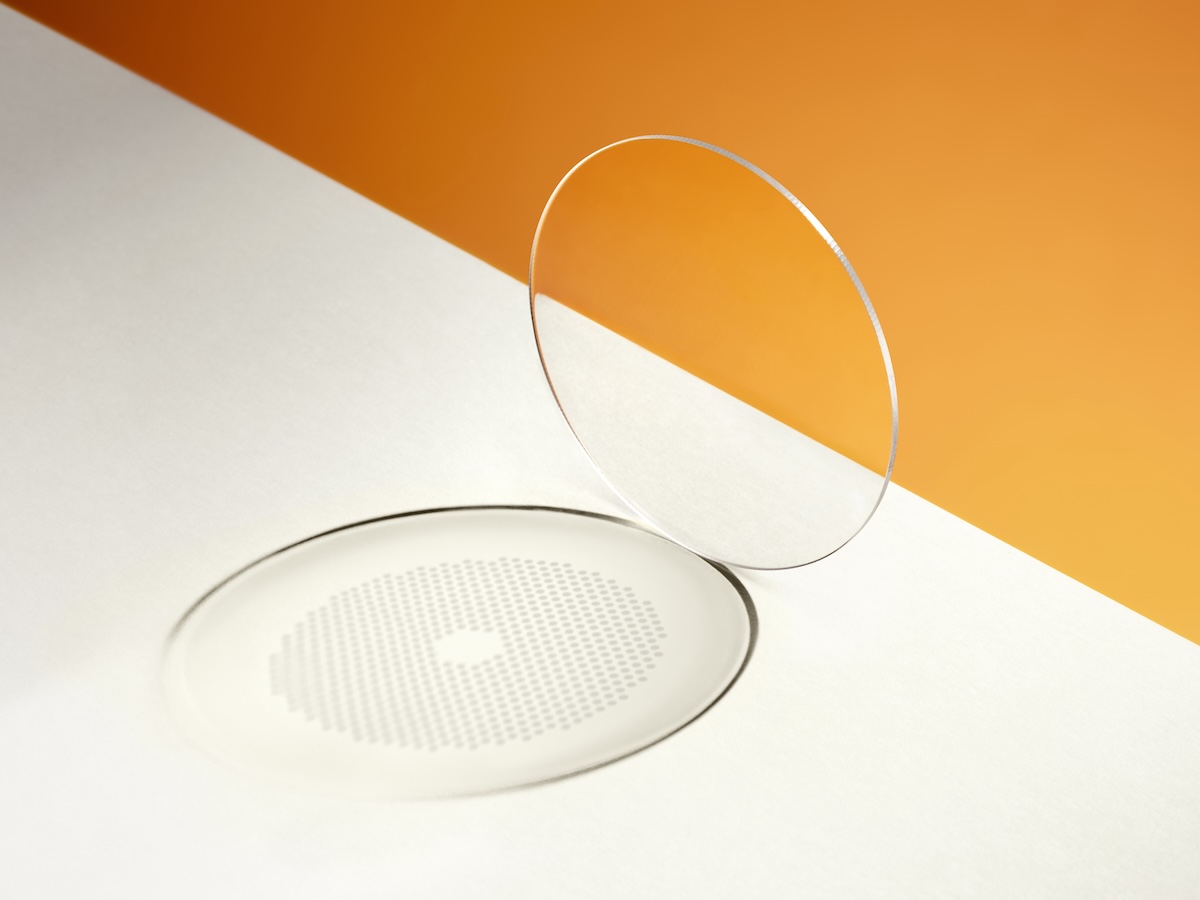
The original MiyoSmart lens, built on D.I.M.S. technology, was developed by HOYA Vision Care in collaboration with The Hong Kong Polytechnic University. Rather than correcting only the central, foveal vision, the lens surrounds a clear central optical zone with hundreds of small defocus segments. Each segment creates a myopic defocus signal on the peripheral retina, the area researchers believe drives the eye to keep growing.
The two-year randomised controlled trial published in the British Journal of Ophthalmology in 2020 showed the original lens slowed myopia progression meaningfully compared with single vision lenses, with follow-up data over subsequent years supporting a sustained effect. Since then, more than 13 million MiyoSmart lenses have been fitted for children in over 50 countries, making it one of the most widely used and researched myopia control spectacle lenses in the world.
We adopted MiyoSmart early because the evidence was already compelling in 2020, and because we wanted our patients to have access to genuinely effective, evidence-based treatment rather than waiting years for a technology to become mainstream. Over the years since, we have fitted and reviewed a large number of children on this lens, and that clinical experience, alongside the published evidence, has shaped how carefully we now assess whether a child is progressing as expected, and what to do when they are not. That same reasoning applies to how we are introducing MiyoSmart iQ now.
What Is Different About MiyoSmart iQ
MiyoSmart iQ does not discard the original design. It refines it, based on years of additional research into exactly where and how the peripheral retina responds to defocus signals. HOYA describes the update as a Triple Enhanced Design (TED) and each of the three enhancements addresses a specific limitation researchers identified in the original lens.
The defocus segments sit closer to the geometric centre of the lens. Research has shown the near-peripheral retina, the area just outside central vision, is particularly responsive to the myopic defocus signal. By repositioning the treatment segments to engage this zone more directly, the lens aims to stimulate the retina more consistently during everyday activities such as reading and screen use, not only when a child looks well off to the side.
The defocus power has been increased. A stronger, more clearly defined signal gives the retina less ambiguity about which direction to grow, or in this case, not to grow.
The treatment zone has been extended. This means more of the lens surface, even in larger frames, contributes to the myopia control effect, rather than the effect being concentrated in a smaller central area.
None of these changes are cosmetic. They come from a specific hypothesis about eye growth signalling, and HOYA has tested that hypothesis in a proper clinical trial rather than relying on laboratory modelling alone.
The Science Explained
It helps to understand, in simple terms, why any of this changes how an eye grows.
When light focuses precisely on the fovea, the small central point of the retina responsible for sharp detail, but focuses behind the surrounding peripheral retina, researchers believe the eye reads this as a signal to keep elongating in order to bring that peripheral image forward. This is thought to be one of the key drivers of progressive myopia in children.
D.I.M.S. technology works by placing that peripheral focus point in front of the retina instead, deliberately and continuously, through hundreds of small segments surrounding clear central vision. The eye receives a competing signal, one that does not encourage further elongation, while the central segment keeps everyday vision sharp.
MiyoSmart iQ does not change this underlying principle. It refines where, how strongly and how consistently that signal is delivered, based on newer research into which specific area of the peripheral retina responds most reliably. Put simply, the goal has always been the same. The engineering behind reaching it has become more precise.
What the Evidence Actually Shows
We are careful with language here, because early results in any field can generate more excitement than they deserve. With that caveat stated plainly, the data on MiyoSmart iQ is genuinely notable.
Six-month results presented at the Asia-Pacific Academy of Ophthalmology Congress in early 2026 showed no average myopia progression in children aged four to twelve wearing the lens, alongside minimal axial elongation. Twelve-month results followed at the ARVO Annual Meeting in Denver in May 2026, from a randomised controlled trial of 196 schoolchildren in Hong Kong. In that trial, nine out of ten children wearing MiyoSmart iQ showed no clinically relevant myopia progression across the full year, and axial elongation across the group was below or comparable to that of children who are not myopic at all.
Researchers involved in the trial have described these results as the strongest efficacy data reported to date for a D.I.M.S.-based spectacle lens. That is a meaningful statement given how much research has already gone into this lens family, and it is why we consider the update worth explaining to our patients in this detailed blog.
While twelve months is a solid trial length, it is not the same as the six to eight years of real-world follow-up now available for the original MiyoSmart lens. A peer-reviewed publication of the full trial results is expected to follow the conference presentations, and longer-term outcomes will continue to be tracked. We will update our advice as that evidence matures, which is exactly how evidence-based care should work.
What This Means in Practice
MiyoSmart iQ has launched in Australia and New Zealand progressively through 2026. At Myopia Clinic Melbourne, it is now part of the range of myopia control options we can discuss with families.
A few practical details are worth knowing.
MiyoSmart iQ is initially available in clear and in the Chameleon photochromic option, which darkens outdoors and returns to clear indoors. A polarised version is expected to follow in the original MiyoSmart line for now, with a polarised iQ variant anticipated at a later date.
The power range has also expanded considerably, now extending from plus powers through to -13.00 dioptres. This matters clinically because it means more children, including those with higher prescriptions or a degree of long-sightedness alongside astigmatism, can be considered for this treatment rather than being limited by lens availability. We can now also treat children who still have a small amount of plus reserves but identified at risk of developing myopia, to delay or prevent myopia onset.
Pricing reflects the additional research and manufacturing investment behind the new design. We will always give families clear, itemised costs before any treatment begins, and we are happy to discuss how MiyoSmart iQ compares with the original lens and with other treatments such as orthokeratology (OrthoK), myopia control contact lenses, or atropine, depending on your child's individual needs and preferences.
Should Your Child Switch From the Original MiyoSmart Lens?
This is the question we expect to hear most often, and it deserves a considered answer rather than a default recommendation.
The original MiyoSmart lens remains a well-evidenced, effective treatment. If your child has been fitted with it and is progressing well, with stable axial length and a prescription that is tracking as expected, there is no automatic clinical reason to change course. Continuity of a treatment that is working is itself valuable.
Where we are more likely to raise MiyoSmart iQ as an option is with children who are still progressing more than we would like on their current treatment, children newly starting spectacle-based myopia control, or families who are specifically seeking the most current evidence-based option available. Switching an established, well-controlled child purely because a newer lens exists is not something we would recommend without a clear clinical reason.
This is the same principle that guides every treatment decision in this clinic. The right treatment is the one that suits your child's specific pattern of progression, lifestyle, comfort and family circumstances, not simply the newest product on the shelf.
There are also practical factors worth weighing alongside the clinical picture. A child who is settled and comfortable in their current glasses, coping well with the lens design and due for a routine review, may not need any change at all. A child whose prescription is climbing faster than expected, or who is being fitted with spectacle-based myopia control for the first time, is in a different position, and that is where the newer design is more likely to be part of the conversation. We will always walk you through the specific reasoning for your child rather than applying a blanket rule.
Looking Ahead
MiyoSmart iQ is unlikely to be the final word in spectacle-based myopia control. Understanding of exactly how peripheral defocus signals interact with eye growth is still evolving, and we expect design refinements, expanded lens options and longer-term outcome data to continue arriving over the coming years, from HOYA and from other manufacturers working in this space.
Part of our role, as a clinic with an international profile in this field, is to stay close to that evolving evidence, through professional education, clinical experience and ongoing engagement with the research community, so that the advice we give families reflects where the science genuinely stands, not simply what the marketing tell us.
What to Expect at Your Appointment
If MiyoSmart iQ is relevant to your child, our approach follows the same structure we use for every myopia management assessment. We start with a comprehensive assessment, including corneal and axial length measurement, to understand how your child's eyes are actually changing over time, not only what their current prescription reads. We discuss your child's individual risk factors, including family history, age of onset and lifestyle. From there, we talk through the realistic range of outcomes for the treatment options that suit your child.
We will always explain our reasoning, not just our recommendation. That includes being upfront about trade-offs, evolving evidence and the limits of what any single treatment, however well designed, can guarantee for an individual child.
Reviews in the first year are generally every 3 months; after this reviews are scheduled at intervals appropriate to your child's age and progression pattern, so that decisions about continuing, adjusting or changing treatment are always based on how their eyes are actually responding. Axial length measurements are performed at every visit to guide our management.
Frequently Asked Questions
Is MiyoSmart iQ available now at Myopia Clinic Melbourne? Yes. Following official release in Australia in August 2026, MiyoSmart iQ is available to order in our Melbourne clinic.
Is MiyoSmart iQ better than the original MiyoSmart lens? Early clinical trial data suggests stronger average myopia control outcomes over twelve months, based on a refined Triple Enhanced Design (TED). Longer-term, real-world data is still accumulating, whereas the original lens now has years of follow-up evidence behind it. Both are legitimate, evidence-based options, and the right choice depends on your child.
Is there a warranty on MiyoSmart iQ? Both MiyoSmart and MiyoSmart iQ lenses come with Hoya's 12-month prescription change guarantee, which means if your child progresses by -0.50 dioptres or more within 12 months of the original purchase date, Hoya will replace the lenses with the new prescription, at no charge. In addition, MiyoSmart iQ with the new toughened S.P.A.R.K. coating comes with a 12-month scratch-resistance warranty against accidental scratches. Ask our team for further information on warranty terms.
Does my child need to wear MiyoSmart iQ every waking hour? As with any myopia control lens, consistency of wear is one of the strongest predictors of how well the treatment performs. We will talk through practical strategies for full-time wear as part of your child's care plan.
Can MiyoSmart iQ be combined with atropine eye drops? For children with faster-progressing myopia, combination treatment is sometimes appropriate. This is assessed individually, and we will explain the reasoning if we recommend it for your child.
Will my child's glasses look any different? No. The defocus segments are only visible on close inspection of the lens surface and do not affect how the glasses look when worn.
How is progress monitored once my child is wearing MiyoSmart iQ? We track both prescription change and axial length at review appointments. Axial length gives us a more direct measure of how the eye is growing, which is often a more useful early indicator than prescription alone, particularly in the first year of treatment.
What if MiyoSmart iQ does not suit my child? No single treatment works identically for every child. If progression is not tracking as expected, we reassess and discuss alternatives or combination approaches, which may include orthokeratology, atropine, or a different lens design, based on your child's individual response.
Booking an Assessment
If your child already wears the original MiyoSmart lens, or if you are exploring myopia management for the first time, we welcome the conversation. Our team has followed this technology since its earliest release in Australia, and we are well placed to help you understand whether MiyoSmart iQ, the original MiyoSmart lens, or another treatment pathway is the right treatment for your child.
Book a myopia assessment with Myopia Clinic Melbourne to discuss your child's individual needs and review the full range of evidence-based treatment options we offer.